


Book Bans Just Hit A Record High in The U.S. — And Guess Which States Led The Nation?
Book Bans Just Hit A Record High in The U.S. — And Guess Which States Led The Nation?

Brittany WongSat, October 17, 2026 at 11:00 AM UTC
9
“Until we can figure out a way to ban rape on campus we should not in any capacity be trying to figure out how to ban a book about it,” one librarian said.
It’s Banned Books Week, and the stakes have never been higher: According to PEN America, a staggering 11,982 book bans were recorded nationwide during the 2025–26 school year — the highest single-year total ever documented.
Texas and Florida are leading the charge when it comes to censorship: Fueled by state legislation like Senate Bill 13, which increased local school board control over library collections, Texas had 8,193 book bans across multiple school districts. Florida, meanwhile, had 3,212 book bans, driven by state-level pressure campaigns and enforcement from the Department of Education and attorney general.
Also Read: I Was Labeled A 'Pedophile' And 'Groomer' In A Viral Video — And It Blew Up My Life
Many of the titles that conservative parents and right-wing lawmakers are targeting deal with issues of racial diversity and LGBTQ+ identity.
The last year also saw a record number of unique titles banned: 7,370, including 4,500 that had not previously appeared in PEN America’s Index of School Book Bans. PEN America said the widening scope may be partly due to school districts using AI to flag books for removal based on titles that have been banned or challenged elsewhere.
The bans affected the works of more than 4,000 authors, illustrators and translators, PEN America reported. For readers looking to push back against censorship, picking up some of these targeted books is one direct way to support their creators and engage with the works at the center of these debates.
Below, we asked local librarians to share the titles that had them scratching their heads the most and explain why they believe these books are valuable for kids and adults alike. (Head to PEN America to see the 12 most frequently targeted books.)
‘The Perks of Being a Wallflower’ By Stephen Chbosky
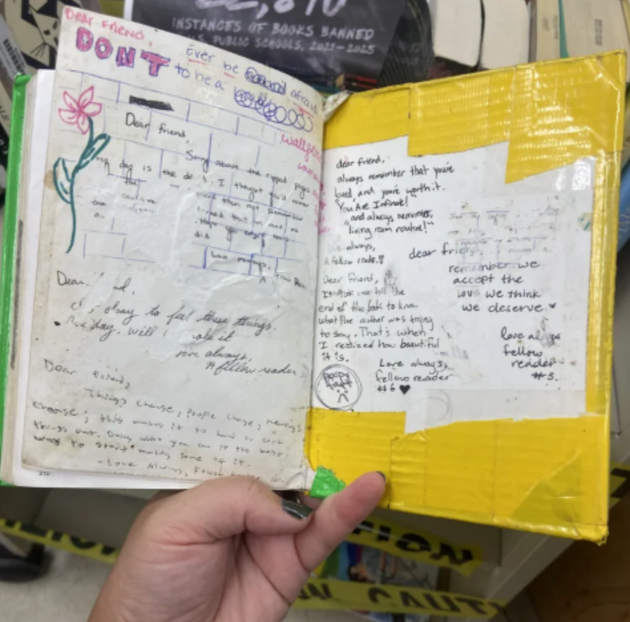
F. Fallon Farokhi said that in her high school library, they have multiple copies of “The Perks of Being a Wallflowers” and they’re always checked out. “One of them even has messages of support written in the back cover by teens,” she said, sharing a photo of the annotated pages.Photo courtesy of F. Fallon Farokhi
Stephen Chbosky’s “The Perks of Being a Wallflower” follows Charlie, a shy, introverted high school freshman whose close friend dies by suicide before the school year begins. As Charlie learns to open up to a small circle of trusted friends, the novel explores his struggles with anxiety, PTSD and mental health.
“This is an important book for teens to read as they may also be facing the same issues as Charlie or they can learn to see the signs in their friends and classmates of needing support,” said F. Fallon Farokhi, a K-12 school librarian and teacher in California.
Learn: Book Bans Just Hit A Record High in The U.S. — And Guess Which States Led The Nation?
Farokhi said that in her high school library, they have multiple copies that are almost always checked out. “One of them even has messages of support written in the back cover by teens,” she said, sharing a photo of the annotated pages.
‘The Kite Runner’ By Khaled Hosseini
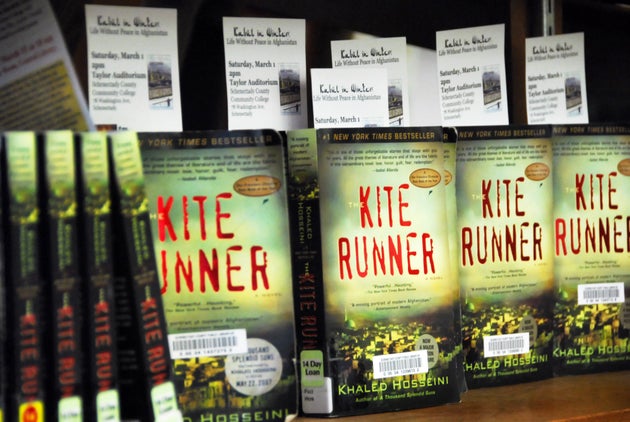
Melanie LeJeune, a high school librarian in Louisiana, said she once heard a student recommend “The Kite Runner” to a classmate. “The student mentioned how impactful it was to read a story that was so human and relatable,” she said.Albany Times Union/Hearst Newspapers via Getty Images
Afghan American author Khaled Hosseini’s “The Kite Runner” explores betrayal, redemption and social divides in modern Afghan society. Melanie LeJeune, a high school librarian in Louisiana, said the novel resonates with teens, transporting them beyond their own experiences in a way she finds touching.
A year or two ago, when one of the AP English teachers brought students to the library to choose their next book, she said she overheard a student recommend this book to a classmate.
Family: This 'Chilling' Right-Wing Movement Is Taking Over Classrooms — And It's Only The Beginning
“The student mentioned how impactful it was to read a story that was so human and relatable,” she said. “It reminded me of something Dr. Rudine Sims Bishop wrote an essay in 1990 about books being ‘mirrors, windows, and sliding glass doors.’”
So many narratives surrounding countries like Afghanistan are tied up in stereotypes and associations with terrorism, and the “Kite Runner” gives readers an opportunity to see beyond that, said Conni Strittmatter, a librarian and the president of the Maryland Library Association.
“It is a country with beautiful culture and traditions, full of people who are living their lives the best they can in their often difficult and tragic circumstances,” she said.
Advertisement
Several Titles By Ellen Hopkins, Like ‘Crank’ And ‘Identical’
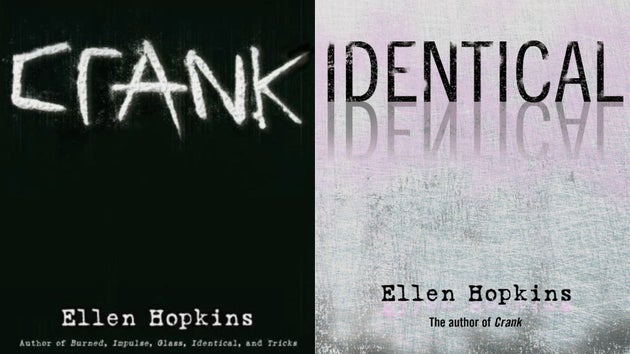
“I will never understand why some people would rather remove a difficult story from a library than consider the possibility that, for the right reader at the right moment, that story could help save a life,” Valerie Byrd Fort said of the Ellen Hopkins’ books that made the list.Amazon
Like this article? Keep independent journalism alive. Support HuffPost.
It’s not particularly surprising that a number of of Ellen Hopkins’ books made it on the list, said Valerie Byrd Fort, a library and information science teaching assistant professor and former former school librarian in South Carolina: Hopkins’ catalogue is frequently targeted for this kind of censorship.
What is upsetting to her is why these books continue to be singled out: The books touch on drug use, addiction, abuse, homelessness, ****** violence and other thorny topics ― in other words, things that happen to teens in real life.
“I will never understand why some people would rather remove a difficult story from a library than consider the possibility that, for the right reader at the right moment, that story could help save a life,” Byrd Fort told HuffPost.
People who challenge and ban books often talk as though reading about something is dangerous, the professor said, but for a young person who is living through addiction, abuse or another difficult situation, the danger is not a book.
“The book may be one of the first places they recognize their own experience and realize they are not alone,” Byrd Fort said, adding that Hopkins often talks about young readers approaching her to say her works have helped them through difficult times.
‘The Fault In Our Stars’ By John Green
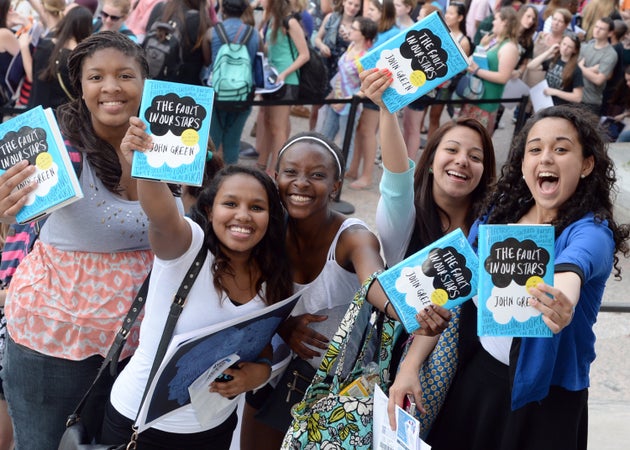
“The Fault In Our Stars” explores themes that “are all things that take place in the lives of the students,” said K.C. Boyd, a librarian at Marya Yates Elementary School in Matteston, Illinois.Rick Diamond via Getty Images
K.C. Boyd, a librarian at Marya Yates Elementary School in Matteston, Illinois, was surprised to see “The Fault In Our Stars,” a book about two teenagers with cancer falling in love, on the list.
“The book’s themes of illness, coping and love are all things that take place in the lives of the students,” she told HuffPost.
Boyd often recommends the book to students looking for romance between protagonists their own age, or stories about navigating illness themselves or supporting someone who is sick.
“These reality-based fiction books are important stories in our collections because they guide and provide students with the understanding that they are not the only ones dealing with these challenges,” she said.
‘Speak’ By Laurie Halse Anderson
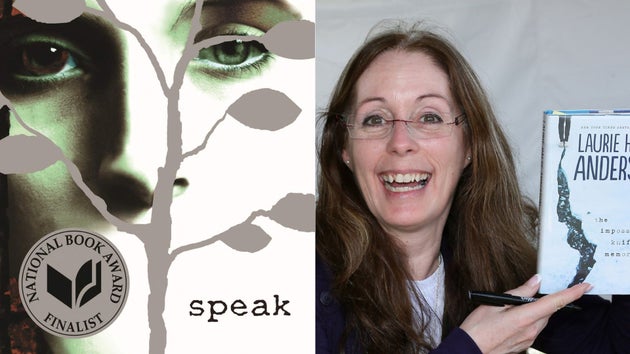
Writer Laurie Halse Anderson book “Speak” deals with trauma and emotional recovery after a young girl is raped in high school.Amazon/David Livingston/Getty Images
Alana Phelan, a retired librarian in New Jersey, said her son was the one who tipped her off to Laurie Halse Anderson’s “Speak,” a novel about a high school student grappling with rape.
“He handed me the copy he’d checked out at his school library, but with a warning: He knew I’d been raped in school and it might be tough for me, but he thought it was too good not to recommend, and he was right,” she said.
While Phelan says her experience was different from what the book’s main character Melinda goes through, reading it healed something in her, 15 years after her experience.
“I wish I’d had it then, and I’m glad it exists now,” she said. “There’s no world where taking this book out of teens’ hands will lead to fewer rapes; instead, having the book accessible to teens allows victims to see themselves on the page and others to gain empathy.”
Sherry Scheline, the president of the Association for Rural and Small Libraries and the director of the Donnelly Public Library in Idaho, said she’s thought of the book often in light of the recent alleged rape case at Cornell University.
“It’s not just a story of rape, it’s the story of the pain when we silence a story and the ability to heal when we speak about our pain,” she said. “Until we can figure out a way to ban rape on campus we should not in any capacity be trying to figure out how to ban a book about it.”
The original version of this story was published on HuffPost at an earlier date.
Related... -
What Kids Lose When They Don't Read Books Like 'Maus'
‘Parents Aren’t Asking For This’: The Biggest Signs MAGA Is Taking Over Your Kid’s School
Parents Are Furious Over This 'Chilling' Right-Wing Movement Taking Over Public Schools
Read the original on HuffPost
Source: “AOL Breaking”
