


From “Love of Your Life” to “Voicemails for Isabelle”—Why We’re Craving Romance Movies That Break Our Hearts
From “Love of Your Life” to “Voicemails for Isabelle”—Why We’re Craving Romance Movies That Break Our Hearts

Samantha BergesonSat, October 17, 2026 at 1:45 PM UTC
0
Credit: Getty Images
This year, many of the biggest blockbusters and most viral features all have one thing in common: loss. Even The Odyssey is all about the grief of losing yourself in the wake of trauma. For millennial female audiences, Voicemails for Isabelle became a beacon of hope—that there could be a person out there who will love you despite your loss and help you heal through the stages of grief. Colleen Hoover adaptation Reminders of Him similarly brought the romance amidst grief. Add in Sara Bareilles’ documentary Good Grief and Emily Rued’s indie film of the same name, and 2026 has revealed one thing about us as an audience: We want more stories that feel cathartic.
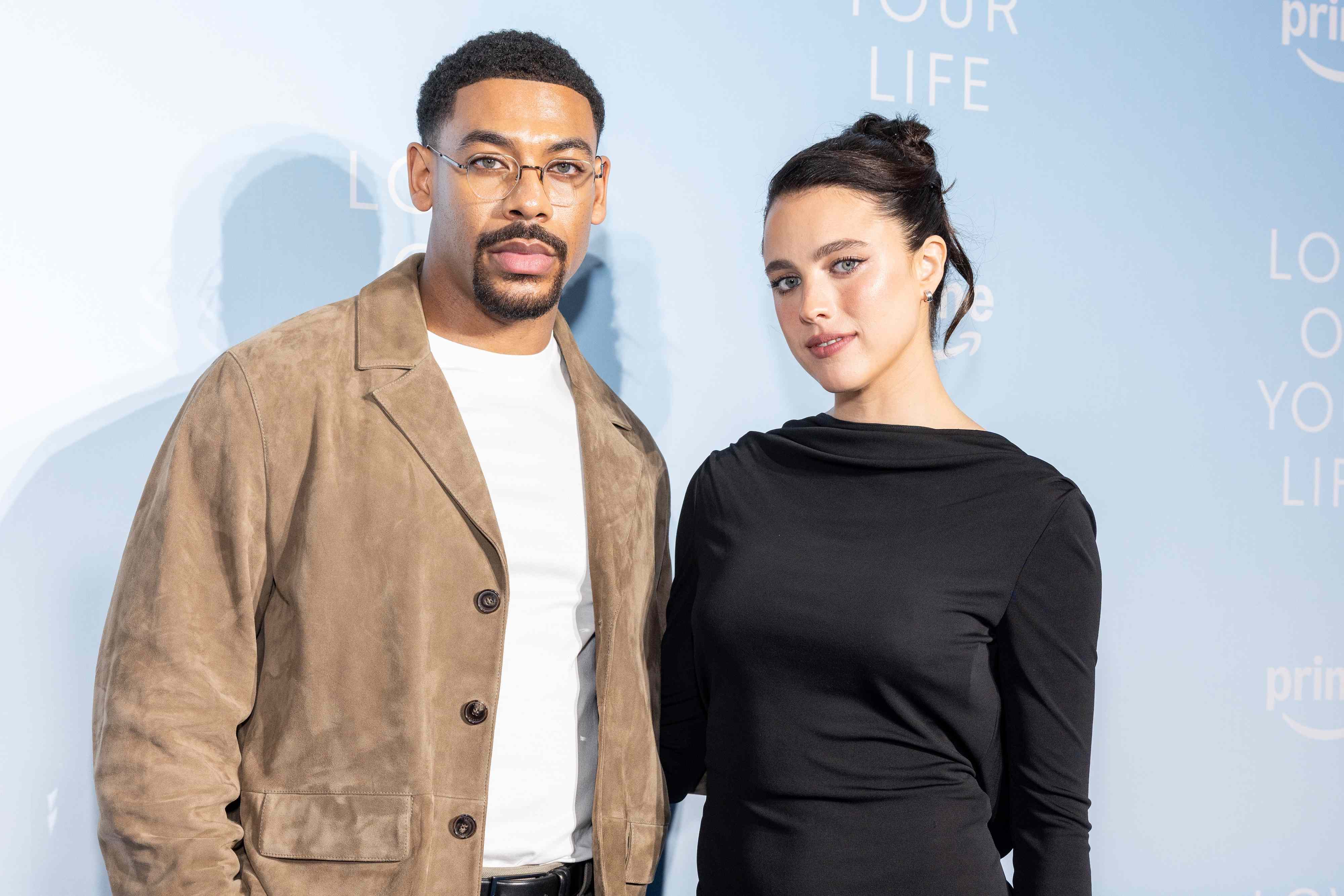
Love of Your Life is the latest feature to deliver that emotional release. Margaret Qualley stars as Maya, a 26-year-old nurse in Boston who falls in love with brilliant PhD student Charlie (Gabriel Basso). As COVID unfurls, Maya is faced with tremendous loss and heartbreak, kickstarting an international journey to run from her grief. Aaron Pierre, Patrick Schwarzenegger, and Catherine Keener co-star as Maya’s closest circle who witness her self-destruction. The film is not only poignant but also brave in its depiction of living when, at times, you want to die.
Love of Your Life screenwriter Julia Cox shares that the entire cast and crew shared a “desire to tell a really honest story about grief, and to look at the messiness that comes along with healing in a raw, truthful, and hopeful way.” Cox wrote the script while she personally was “grappling with questions about loneliness, alienation, and whether or not human connection is worth it when with that comes so much risk of loss. How do you keep going when the worst thing happens to you, and how do you embrace the risk of falling in love again when you know how painful loss can be?”
“I think we see more of these stories about millennial people—and particularly millennial women—grieving and overcoming loss because it’s of the times,” Cox says. “We find ourselves at mid-life having survived traumatic crises as individuals, and as a population we are faced with the reality that danger and death lurk around every corner. That’s just a fact of the world that we’ve grown up in, and with that comes an awareness of the potential for grief, and for many of us, the experience of grief.”
Leah McKendrick, the writer/director of Netflix hit Voicemails for Isabelle, agrees. While vastly different in tone, McKendrick’s feature similarly stars a millennial female lead (the titular Isabelle, played by Zoey Deutch) who opens herself back up to love again after losing her younger sister.
“We are just confronting generations that are wading through a lot of tough stuff: We’ve been through terrorist attacks, pandemics, and some real economic and political struggles,” McKendrick says. “If I were to pull out my own insides, there’s a lot of grief there. I think at my core, I have a deep loneliness that I’ve always had. I think my films reflect that.”
"So often, in not knowing what to say to someone who is grieving, we say nothing, and friends and loved ones fall away when they are needed most."
Filmmaker Emily Rued
That pain is central to the characters we are witnessing onscreen right now. Yet that pain is not what defines these female leads—it’s their resilience.
“The stories now that are really resonating are people who feel dead inside and come together and find a reason to live,” says Lauren Levine, Reminders of Him screenwriter and Verity executive producer. “We’re dealing with people who have a bit more trauma in their past. And that trauma is relatable to us because we are all a bit traumatized.”
Advertisement
Is that trauma gender-specific? No, but women do seem to carry more of it—or at least are more vocal about that burden.
“We’re in a moment now where young women in particular are really relating to characters that have a trauma that they need to move past to find a way to live—COVID and MeToo and the current administration, it’s very challenging and traumatizing. So having stories about people conquering their traumas is very comforting and very relatable,” Levine says. “It’s like going on an escape with a happy ending but also quite therapeutic in certain ways.”
Independent filmmaker Emily Rued, who wrote the dramedy Good Grief after the sudden death of her mother, cited a certain communal understanding among millennial women. “I am seeing a shared experience of loss and frustration at many facets of our society, which amounts to a grief of sorts, particularly amongst women, but that grief is coupled with a lot of anger. Women are angry that they have been systematically silenced, undervalued, and that their rights are being taken away,” Rued said. “There’s always been grief in that, but now the anger is what is really loud, and they are finding ways to put their voice to it.”
Making Good Grief was part of Rued’s own healing journey, and she has since become a psychotherapist specializing in grief. “Grief will never not be relevant,” Rued said. “It is a universal experience, yet utterly personal in every case, and society continually pushes it under the rug. So often, in not knowing what to say to someone who is grieving, we say nothing, and friends and loved ones fall away when they are needed most. That’s why I think stories and conversations about grief are so important.”
The therapy of speaking about loss is at the center of Grammy winner Sara Bareilles’ documentary—also aptly titled Good Grief—which brings the very real struggles of today to the forefront as a shared form of counseling. Bareilles had lost two of her closest friends to cancer, all while she was struggling with infertility. She went on to invite her friends and collaborators to a farm in upstate New York to record her first album in years, titled Good Grief.
Director Josh Alexander says that making the film was “nourishing and nurturing.” “Grief is something that needs to be seen and witnessed. It is not something that can be metabolized alone,” Alexander says. “I think the movie is a big gift. It is a permission structure that Sara and the film allowed people to express and feel things that we, as a society or a culture, often do not allow people to feel.”
"I’ve found that, on the other side of loss, is a much deeper appreciation for one’s own life."
Director Rachel Morrison
This perhaps also explains why, in Love of Your Life, Maya (Qualley) has to take time away from her usual life to move through each stage of grief. “I was particularly drawn to the fact that Maya is not perfect,” says director Rachel Morrison. “She makes mistakes. She makes some pretty questionable decisions. But she’s human, and the script never judges her for that,” the director explains. “I too have been transformed by loss and, like Maya, had to navigate how to keep living after it. It got messy and dark, but life feels more vital. I’ve found that, on the other side of loss, is a much deeper appreciation for one’s own life, and that’s ultimately what the movie is about for me: It’s about finding your way back to yourself, and to hope and vitality even after a tremendous blow.”
Like Bareilles and Alexander’s Good Grief, Love of Your Life gives us, as the audience, permission to feel the emotions that are warring inside during the recovery from loss. “We’re no longer mandating that our protagonists come out of traumatic experiences completely healed or somehow better,” Morrison continues. “It can be a process, and it can be messy. It’s a much more honest way of looking at life.”
on Real Simple
Source: “AOL Entertainment”
