


Here Are the Hottest Cars and Concepts of the 2026 Paris Auto Show—and Why They Matter
Here Are the Hottest Cars and Concepts of the 2026 Paris Auto Show—and Why They Matter

Angus MacKenzieThu, October 15, 2026 at 9:51 PM UTC
23
The Hottest Cars + Concepts of the 2026 Paris ShowAngus Mackenzie - MotorTrendChina has arrived in Europe. Can Europe fight back?
Of the 21 automakers with vehicles on display at this year’s Paris auto show, 11 of them were Chinese. China’s automakers aren’t coming to Europe; they’re there already, and in force. Chinese brands in August accounted for almost 12 percent of new vehicle sales across the European Union and the U.K. Sales of Chinese vehicles are on track to top 1 million units across the region this year.
A tour of the halls at the Paris Expo Porte de Versailles revealed a worrying truth for Europe’s automotive establishment: Unlike the Japanese and Korean brands, China’s automakers have no intention of starting at the bottom and working their way up into the premium and luxury segments. They’re already chasing customers that companies like Mercedes-Benz, BMW, Audi, and Range Rover have long regarded as their own, with large cars and SUVs that boast opulent interiors and cutting-edge technology at prices the Europeans can’t match.
Paris revealed that luxury, long the trump card of the European automotive elite, is about to become commoditized as China’s automakers race upmarket. “It’s incredible,” designer Fabrizio Guigiaro said after watching the reveal of the Zeekr 9X, an imposing Range Rover–sized SUV with a sophisticated hybrid powertrain, an interior that could almost belong in a Bentley, and a price tag lower than a Cadillac Escalade IQL. “That,” he said, pointing to the near-empty Mercedes-Benz stand across the aisle, “is last century. This,” he said with a nod at Zeekr’s stand, “is next century.”
Perhaps. Among the notable absentees from the Paris show were BMW and Jaguar Land Rover. CEO Milan Nedeljkovic pulled BMW out of the show to cut costs after the company issued a profit warning in July because of the Middle East war and … a 30 percent downturn in China sales. JLR was never coming to Paris; the company has decided to eschew auto shows in favor of more direct consumer marketing. As a result, it missed an opportunity to make the Jaguar Type 01—a car still seen in the metal by relatively few people—one of the show’s stars. For most of the other legacy automakers, Paris seemed an almost plaintive affair, their relatively modest stands seemingly aimed at simply reminding people that despite all the noise from the Chinese brands, they were still in the car business. But there were signs of fight from some European automakers.
Volkswagen amped up the launch of the ID.Tiguan, the good-looking electric-powered SUV that will replace the lumpen ID.4 in the U.S., while Audi showed its retro-inspired A2 E-Tron. Center stage on Ford’s stand was an array of historic Ford rally cars arranged around a replica of Max Verstappen’s Ford-partnered Red Bull Formula 1 car. These were props to support a new marketing tagline, “Ready, Set, Ford.” Along with a promise that five new European Ford models to be launched by 2029—a B-segment electric hatchback built on Renault’s AmpR architecture, a compact electric crossover, two multienergy midsize crossovers that would be available with hybrid or pure electric powertrains, and a downsized, plug-in hybrid variant of the Bronco—will have “rally-bred” performance and handling.
Ford’s European strategy is clearly designed to establish a key point of differentiation between the Blue Oval’s products and those of Chinese makers Geely, BYD, and SAIC, among others. But without cars that showed what its “rally-bred” tagline means, it remained to most Paris show attendees a nebulous idea. On the Renault Group stand, however, and the stands of Stellantis’ mainstream European brands, a string of stunning concepts, a lineup that in terms of their quality and quantity rivaled the glory years of the Geneva and Detroit auto shows, signaled that some of Europe’s automakers are now taking the Chinese threat very seriously.
“We’re really focused on reigniting that passion, that love affair with cars,” Stellantis design boss Ralph Gilles said of the concepts on the Alfa Romeo, Citroën, DS, Fiat, Lancia, Opel, and Peugeot stands. He believes Stellantis’ brands can deliver something Chinese automakers have yet to figure out, namely, how to build vehicles with distinctive design and character that reinforces their backstories. “I can’t tell them apart,” he said of the Chinese cars and SUVs on display in Paris. “We want to reaffirm our brands’ individual directions and change up their form factors. None of our cars look alike. They all have their own mission.”
Yes, the Chinese have arrived in Europe, and Europe’s automakers are worried. But the 2026 Paris auto show may be remembered as where Europe began to think seriously about fighting back and where the battle lines between the two automotive cultures were drawn. Against that background, here are some of the cars that caught our eye in Paris.
Angus Mackenzie - MotorTrendAlfa Romeo Cuorerosso
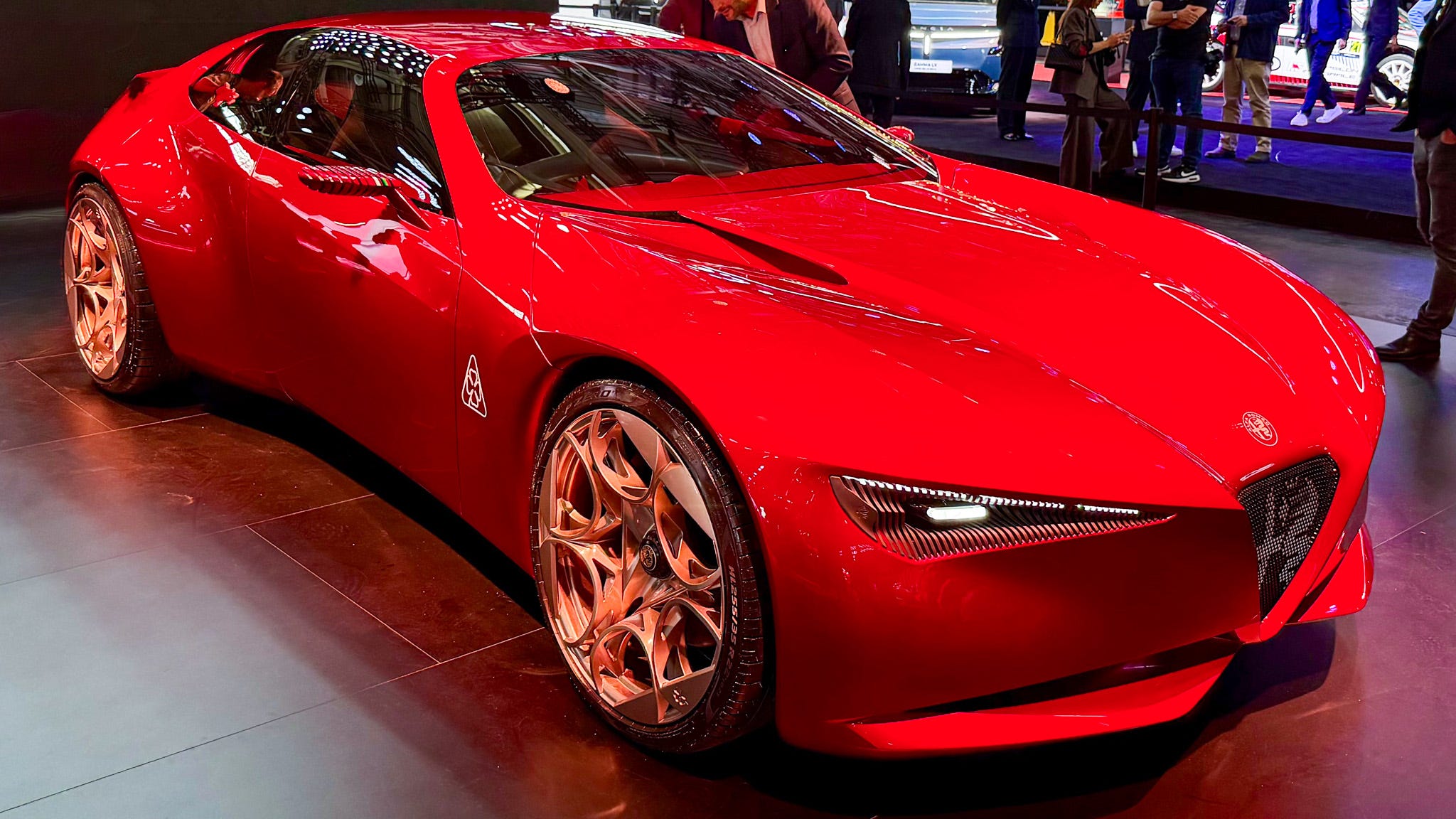
Designed by Alejandro Mesonero, the Cuorerosso (Red Heart) shows what future Alfa Romeos should be like, Gilles said. In other words, a physical expression of the passion and performance that despite often egregious exploitation (we’re looking at you, Tonale) has long made Alfa one of Italy’s most loved brands. The Cuorerosso is designed around a revised version of the Giorgio Sport platform that underpins Maserati’s GranTurismo and GranCabrio, so it’s rear-wheel drive. Under that flamboyant exterior is a resolutely driver-focused car, to the point that the Cuorerosso has no screens in its interior. A production version, which would be powered by a twin-turbo hybridized version of Alfa’s 2.9-liter V-6, would look very similar, Gilles said. “The Georgio Sport’s a great chassis, and this was about how lean of a vehicle could we make on top of that chassis.”
Angus Mackenzie - MotorTrendAlpine A310 Vision
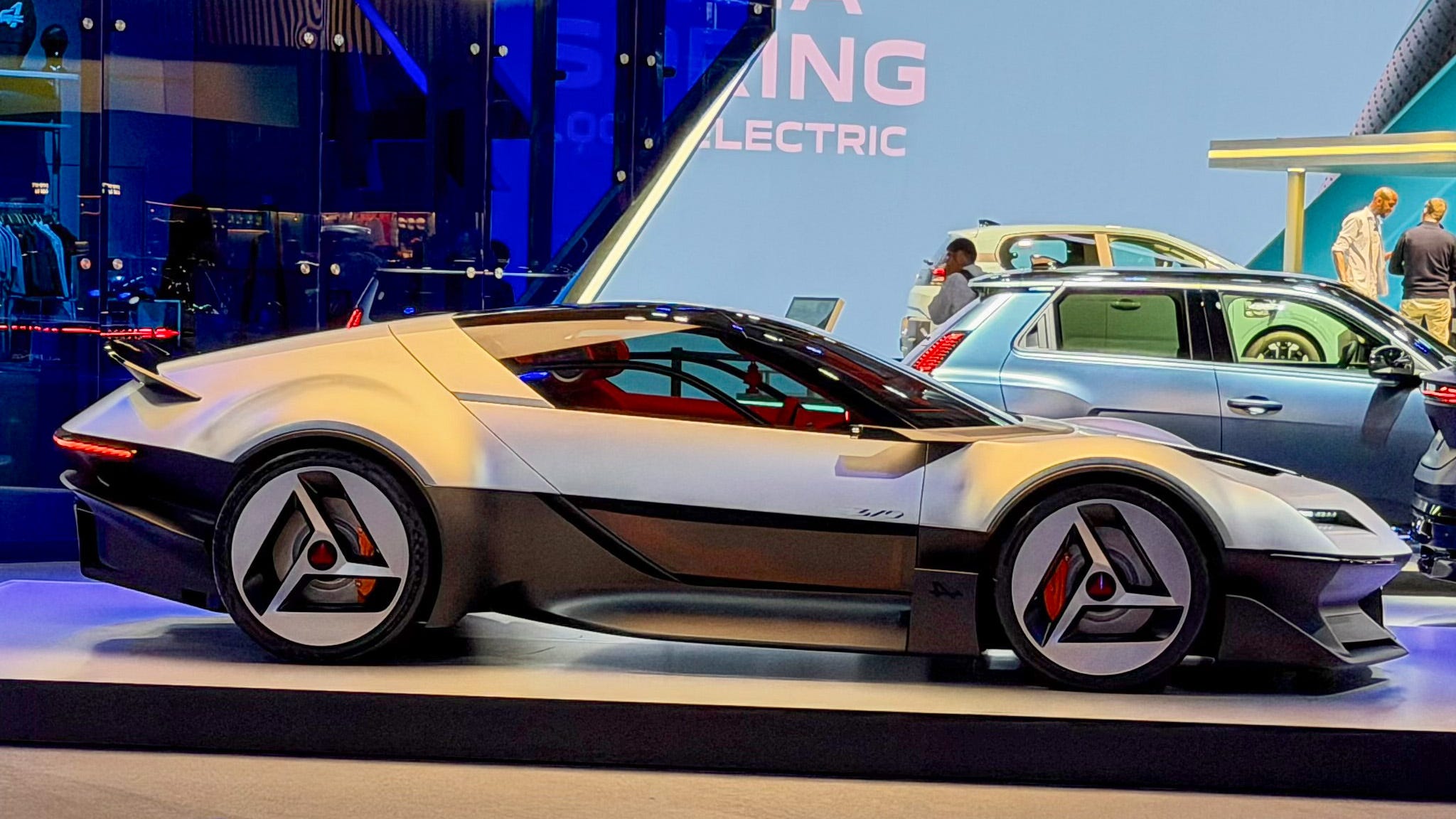
We loved the 2018 Alpine A110, the lovely little mid-engine coupe from Renault’s sports car division that recalled the delicate poise and ride of the 1960s original. The Alpine A310 Vision reworks the visual iconography of the larger Alpine A310 coupe released in the 1970s and eventually fitted with Renault’s 2.7-liter PRV V-6 to challenge Porsche’s 911. The A310 Vision is built on the highly flexible APP platform that will underpin the electric-powered replacement of the new A110. As with Porsche’s new electric Boxster platform, APP allows batteries to be located behind and in front of the passenger compartment to ensure a low floor and can be configured as rear- or all-wheel-drive vehicle. But unlike the Boxster platform, APP can accommodate an internal combustion engine if needed. Alpine sources hint a low-volume production version of the A310 Vision could be built if enough wealthy clients are interested.
Angus Mackenzie - MotorTrendAudi A2 E-Tron
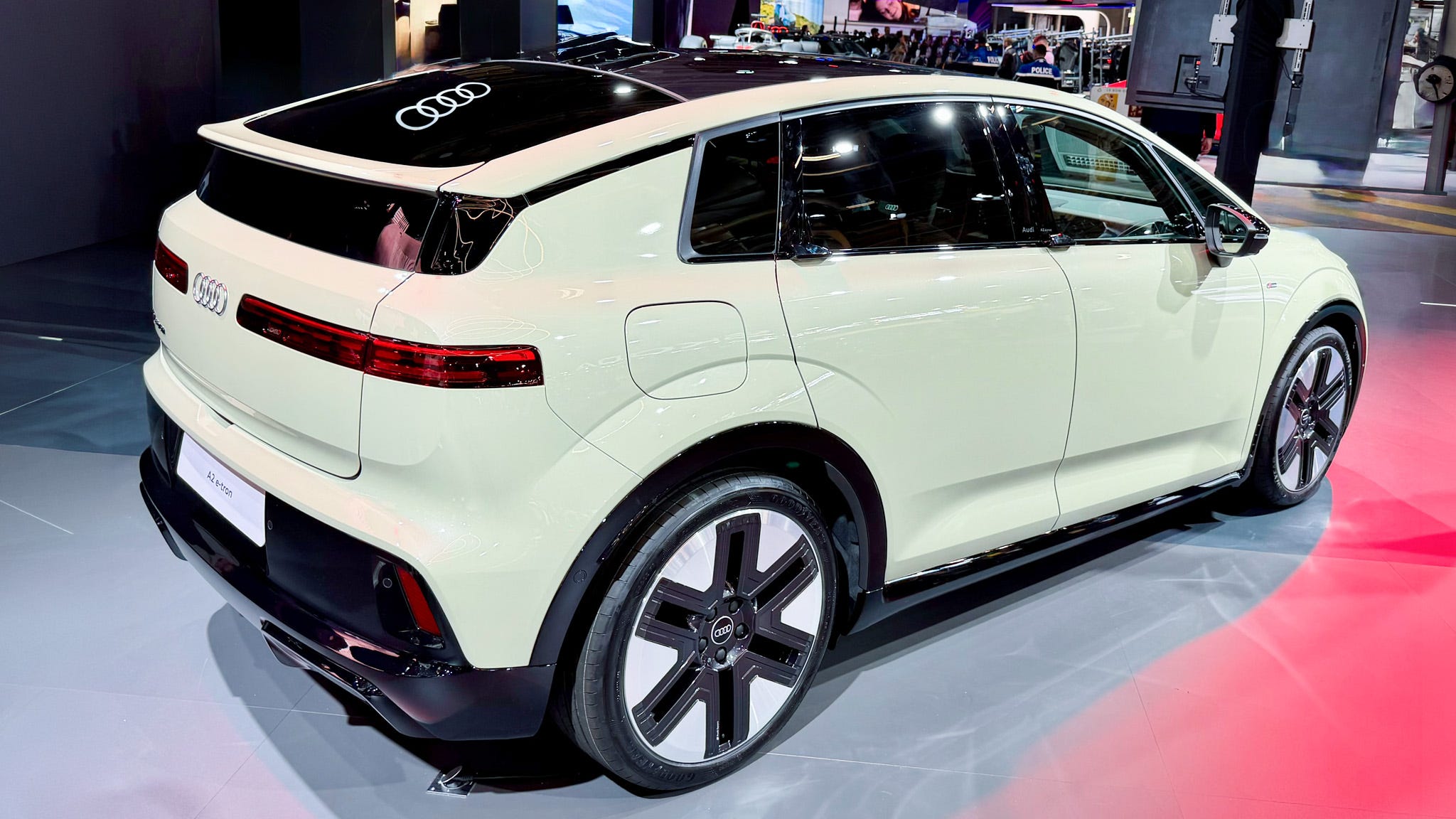
Audi unveiled the A2 E-Tron to media in Paris in September, but this Paris show gave the public its first chance to get up close and personal with the brand’s new compact EV. Built on VW Group’s MEB platform, the rear-drive A2 E-Tron is available with four power levels, ranging from 168 to 322 hp, and with three differently sized batteries: 52 kWh, 61 kWh, or 84 kWh. The A2 E-Tron’s distinctive styling echoes that of the original A2, an ultra-light and ultra-efficient city car designed in the late 1990s to take on the original Mercedes-Benz A-Class. But while that A2 was cool and clever with an aluminum space frame body using the same technology as Audi’s top of the range, it was also way too expensive to build, and Audi lost money on every car sold. Inglostadt will be hoping it has the numbers right this time around.
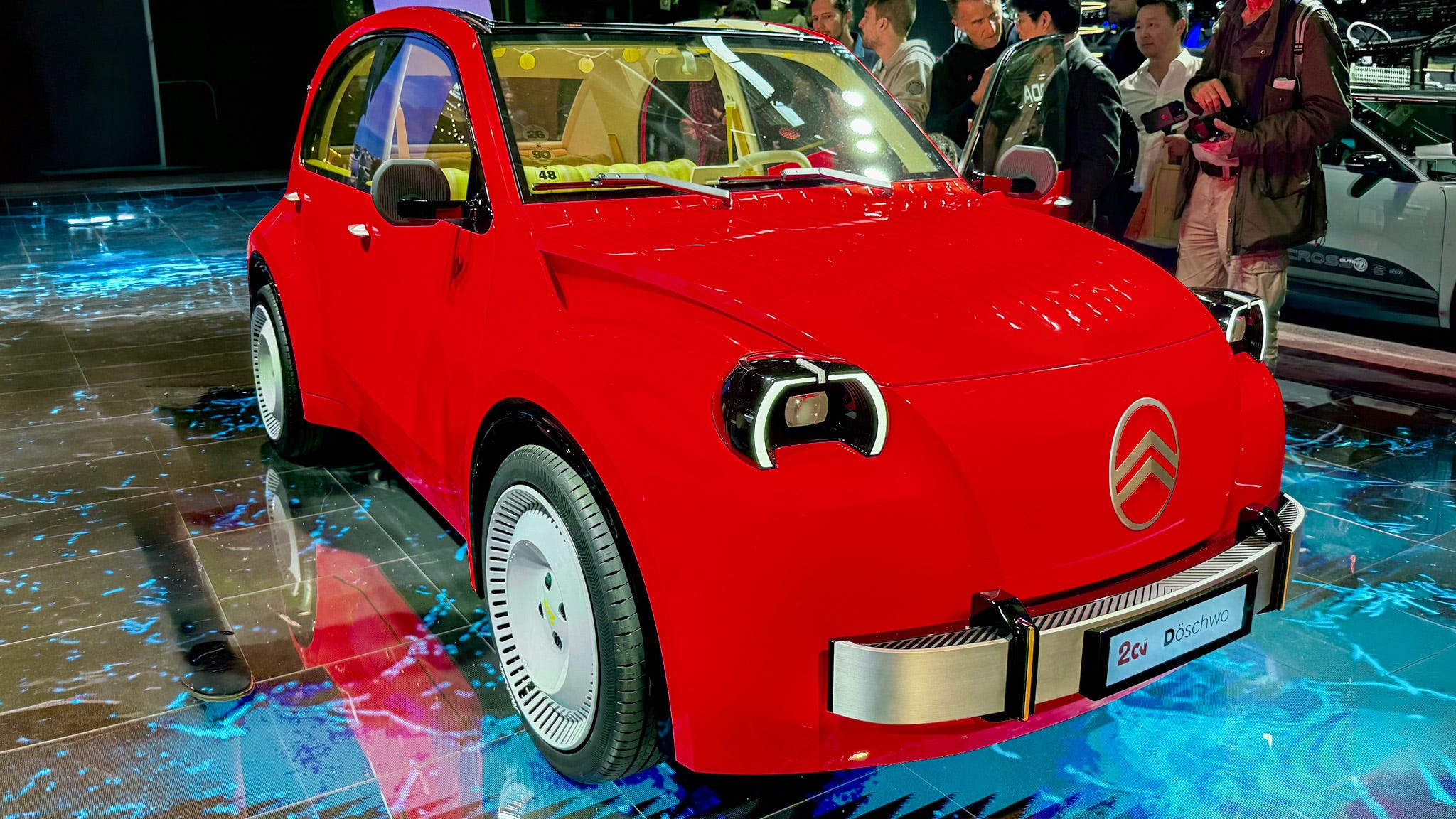
Angus Mackenzie - MotorTrendCitroën 2CV Concept
Few cars are more iconically French than Citroën’s 2CV, a car conceived in 1936 as “four wheels under an umbrella” and designed to transport four people and 110 pounds of luggage at 30 mph in comfort. Then-Citroën chief Pierre-Jules Boulanger also famously stipulated it be able to cross a freshly plowed field without breaking eggs carried in a basket on the back seat. Launched in 1948, the 2CV stayed in production for 42 years. A lot of people have thought about reinventing it. None has dared, until now. This concept previews an electric-powered 2CV that’s under development at Citroën and will hit the road in 2028. The car will be light, with a target weight of about 2,200 pounds, and its range will be about 125 miles, more than adequate for a small city car. More important, it will be priced at just $15,000. “The 2CV is the right solution for a $15,000 car today,” Gilles said. “It’s really hard to find something as useful, with so much charisma, and that you don’t have to make apologies for at that price.” Bring it on.
Advertisement
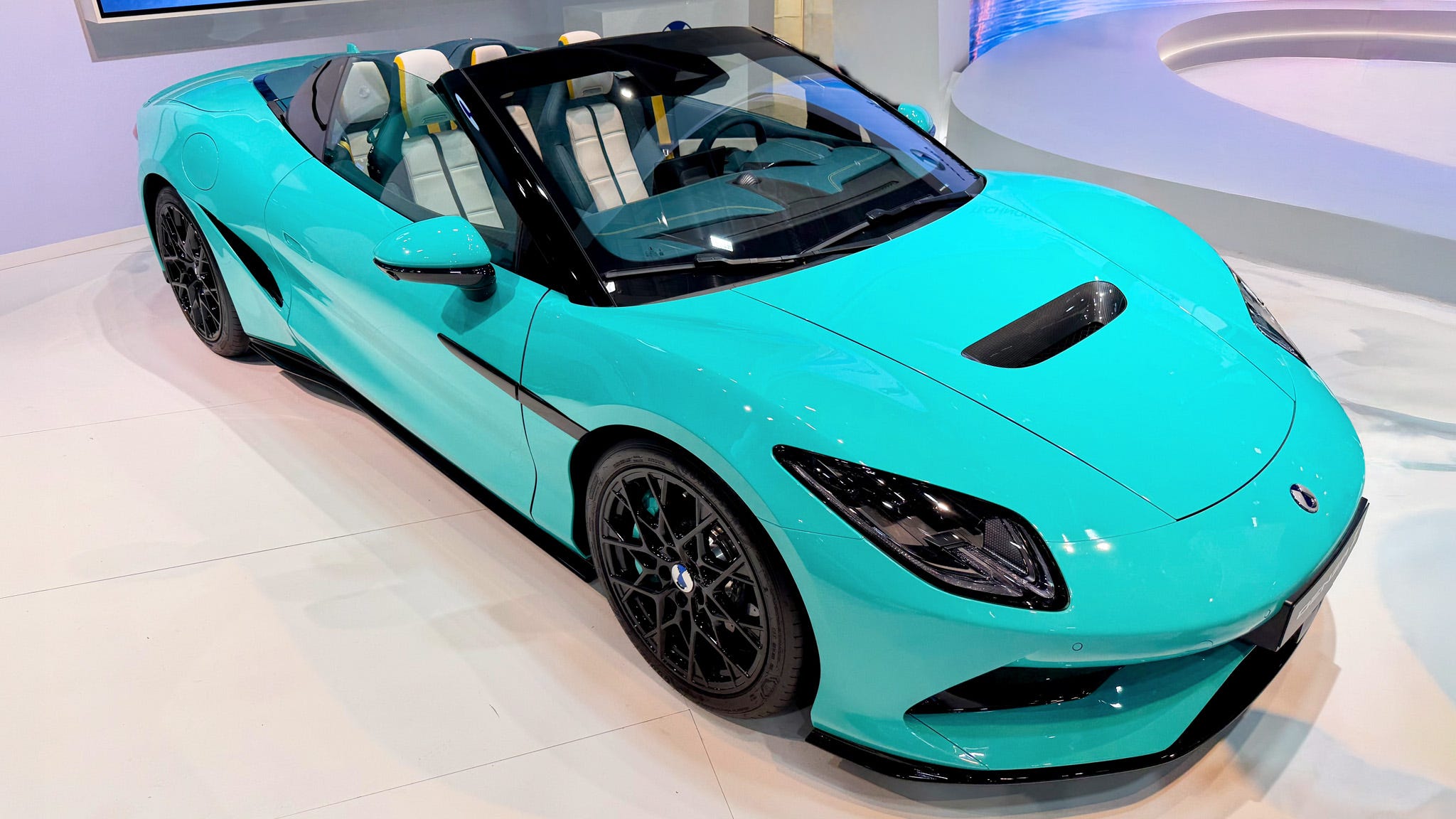
Angus Mackenzie - MotorTrendDenza Z Spider
The open-top version of the Denza Z was unveiled in Beijing earlier this year, but Paris gave Europeans one of the first opportunities to get a good look at China’s first-ever convertible supercar. The Denza Z Spider shares its monster tri-motor electric powertrain with the Z coupe. That means 1,579 hp and 929 lb-ft of torque, enough to hurl it from 0 to 60 mph in less than 2.3 seconds on the way to a 186-mph top speed. The electrons are supplied by a 76-kWh version of BYD’s second-generation lithium-iron phosphate battery that can be taken from a 10 percent state of charge to 97 percent in about nine minutes when hooked up to BYD’s 1,500-kW Flash Charge network. Claimed range is 249 miles on the European WLTP test, which suggests an EPA-rated range of about 212 miles. But here’s what’s giving Europe’s automotive elite the cold sweats: The Z Spider will deliver performance near that of a Ferrari 849 Testarossa, at least in a straight line, for one third the price.
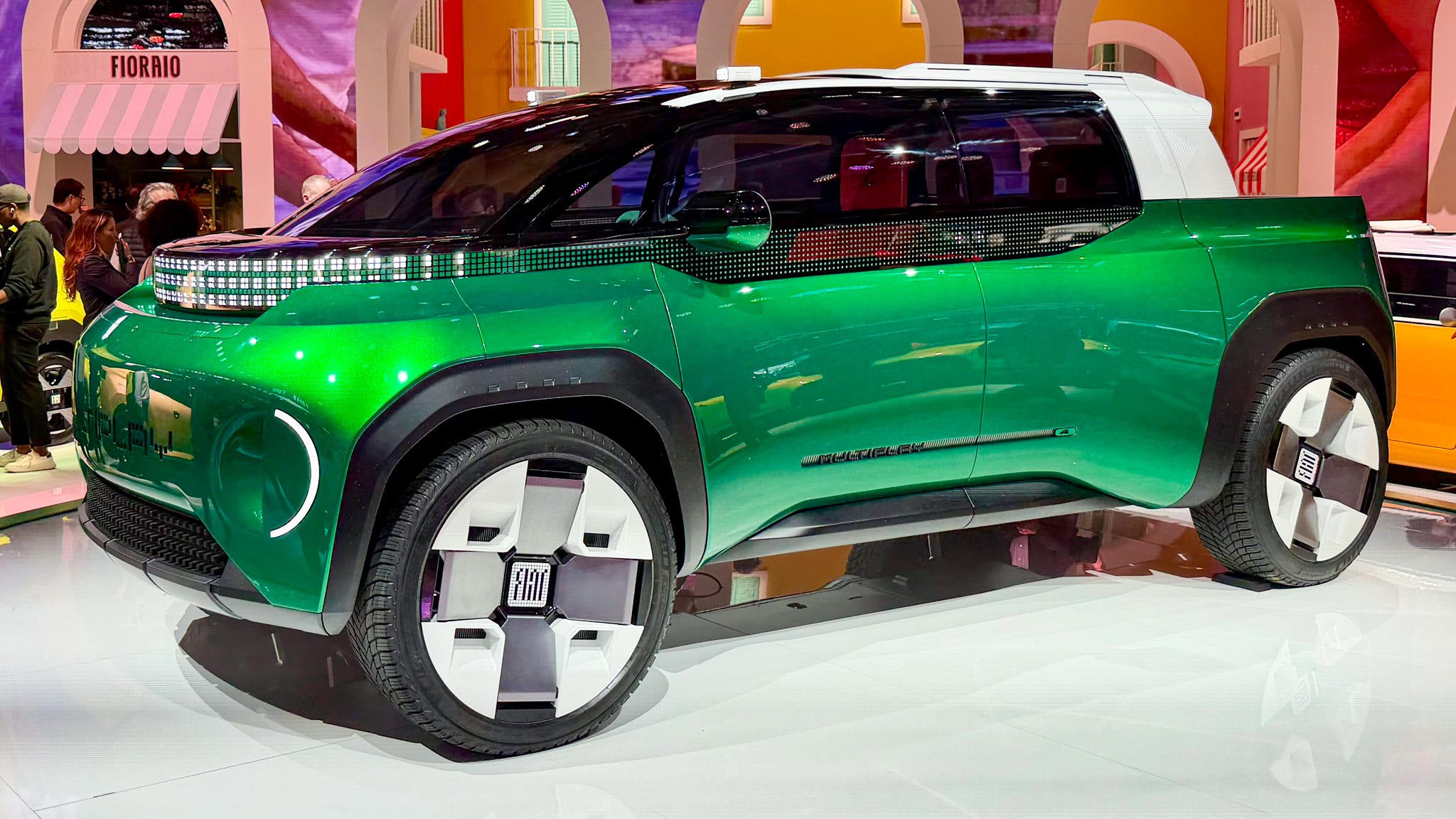
Angus Mackenzie - MotorTrendFiat Multiplay
Fiat’s 1998 Multipla was a defiantly quirky minivan that accommodated its six passengers in two rows of three individual seats. The Fiat Multiplay concept is no less quirky. It looks like a pickup, able to carry tall loads like bikes and boxes in its rear space. But the C-pillar and rear section of the roof can be motored rearward, and a window can be extended upward from the tailgate to create a closed, three-row, six-passenger SUV. The idea behind the Multiplay is simple, Fiat designer François Leboine told journalists in Paris. “We must find something that has the practicality and versatility of the minivan but is more emotional,” he said. Officially, Fiat said there won’t be a production version of the Multiplay, though it has been working on the idea for two years. And sources confirm it could be built on Stellantis’ forthcoming STLA One architecture as the company has figured out a way of packaging the HVAC system so the windshield could be as far forward as that of the concept.
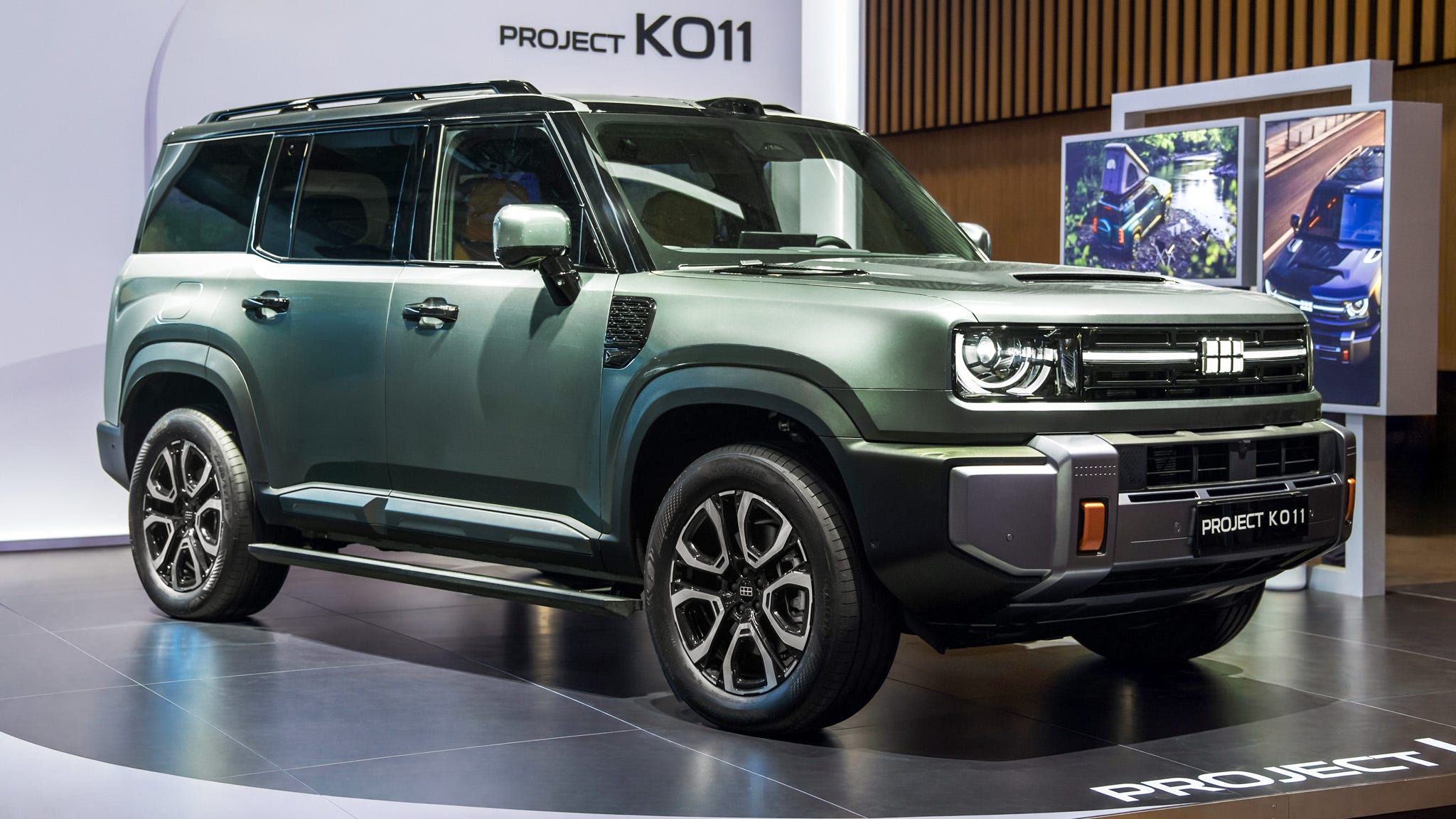
Angus Mackenzie - MotorTrendGeely Project K011
Although this off-roader has been around in concept form since 2025, Geely officially pulled the covers off the European-market production version in Paris. Project K011 is for now a working title; Geely execs having rightly concluded the rig’s Chinese market names, Galaxy Battleship 700 or Galaxy Cruiser 700, are a bit too over the top for European tastes. Project K011 debuts Geely’s new GTA platform. GTA—it stands for Geely Terrain Architecture, not Grand Theft Auto—has been specifically designed to underpin a coming range of Geely-branded off-road models. Although the Battleship and Cruiser 700s sold in China are pure EREVs (the top version pumps out 1,129 hp), tax reasons mean the European versions of Project K011 are likely to be powered by one of Geely’s plug-in “Super Hybrid” powertrains with a single motor at the front axle, two motors at the rear, and a 1.5-liter four-cylinder combustion engine to keep the battery charged and to drive the front wheels at speeds faster than 50 mph. Geely said the Project K011 will use AI to automatically adapt power and torque distribution and air suspension settings to different terrains.
Angus Mackenzie - MotorTrendLi Auto Li 6
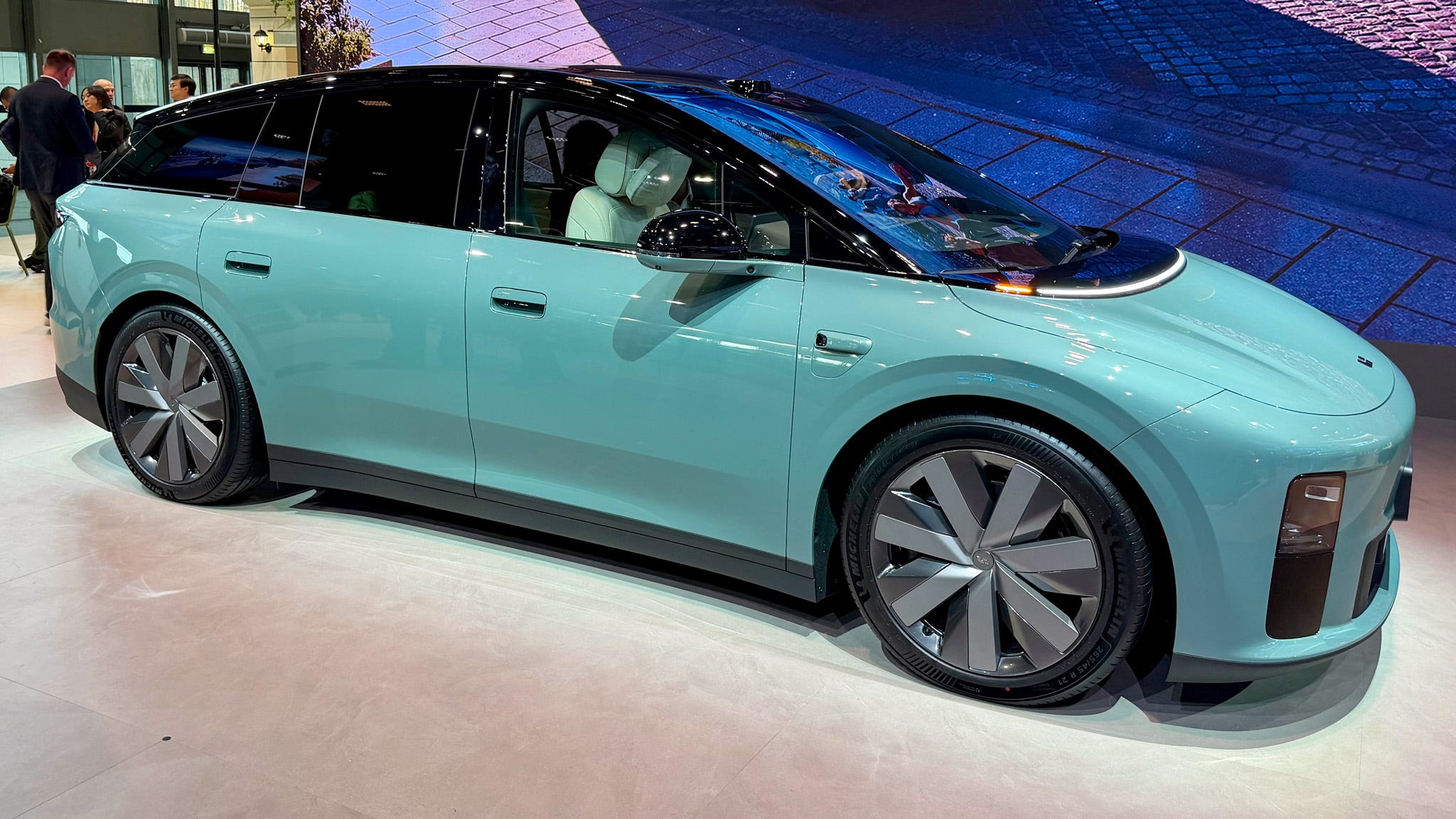
Too many Chinese electric SUVs are unashamed riffs on the Porsche Macan or Porsche Cayenne in terms of their visuals. The new Li Auto Li 6, a nicely proportioned and deftly surfaced low-roof five passenger crossover, is a refreshing change. Originally launched in China in 2025, the Li 6 is the first vehicle to be launched in Europe by Li Auto, the automaker founded in 2015 by Chinese web mogul Li Xiang. Li Auto only released its first vehicle, the aptly named Li One, in 2019, but now produces eight models with a mix of EV and EREV powertrains. The Li 6 is an EV and will be available with a 335-hp rear-drive or 536-hp all-wheel-drive powertrain fed by a 96-kWh battery that Li Auto said gives each model a WLTP-rated range of 398 miles and 348 miles, respectively. The Li 6’s 800-volt electrical architecture means it can accept peak charge rates of up to 500 kW, allowing the battery to be taken from a 10 percent state of charge to 80 percent in less than 11 minutes.
Angus Mackenzie - MotorTrendLynk & Co 07GT
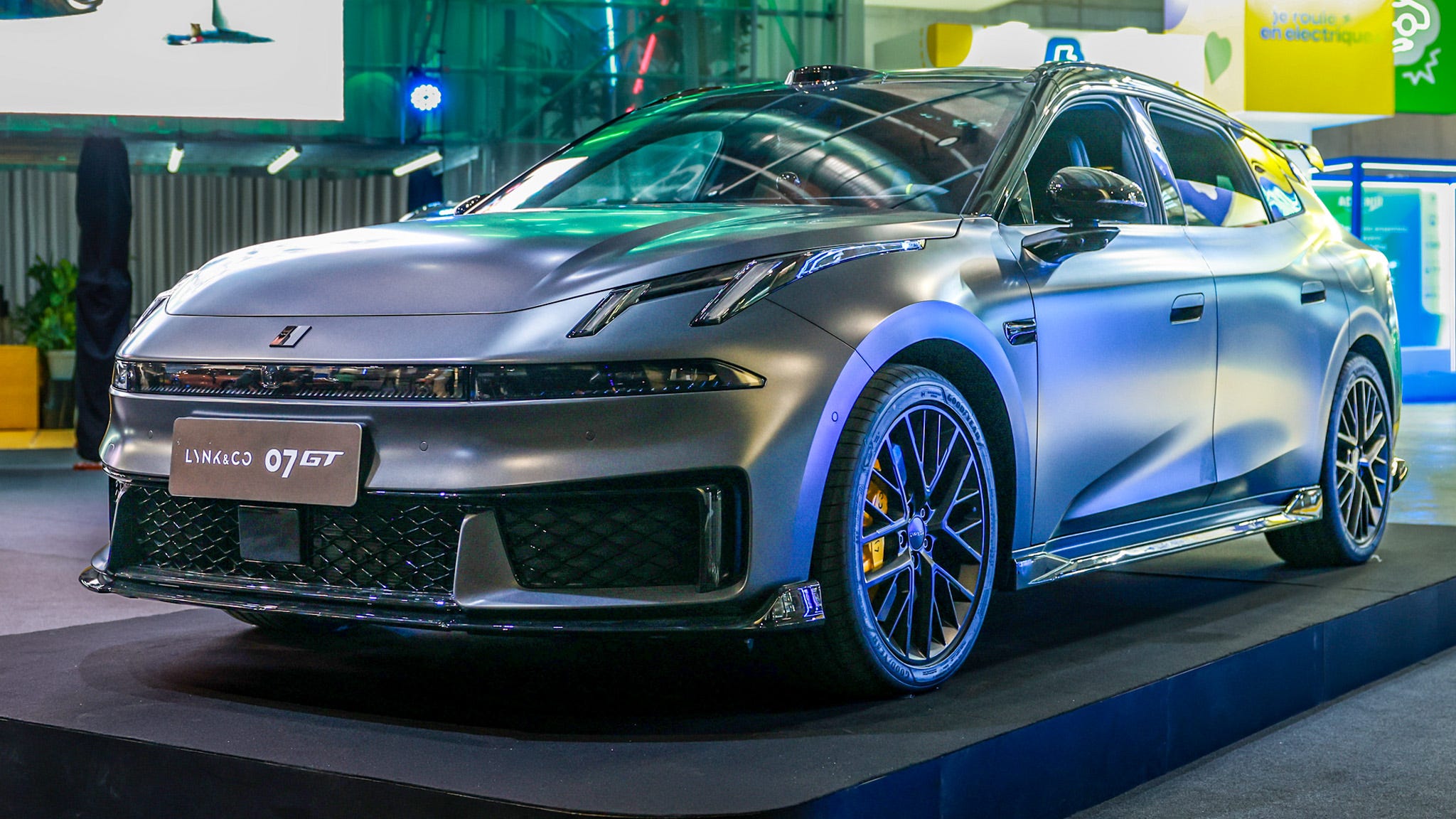
In the Geely Auto hierarchy, Lynk & Co sits between entry-level Geely and luxury Zeekr, and it’s positioned as the company’s global premium new energy brand, which means it sells a mix of plug-in hybrid and pure electric vehicles. The 07GT will be the fourth vehicle to join the Lynk & Co lineup in Europe, though the brand sells 11 models in China. The 07GT is a plug-in hybrid shooting brake that in front-drive form has 402 hp and in all-wheel-drive form 523 hp. Both versions come equipped with a 28.3-kWh lithium-iron phosphate battery pack that Geely claims delivers pure electric range of 124 miles in the front-drive car and 106 miles in the more powerful all-wheel-drive version. The 1.5-liter turbocharged four-cylinder engine under the hood, combined with Geely’s innovative three-speed planetary transmission that allows it to work as either a series or parallel hybrid, boosts total range to a claimed 817 miles.
Angus Mackenzie - MotorTrendOpel STX Concept
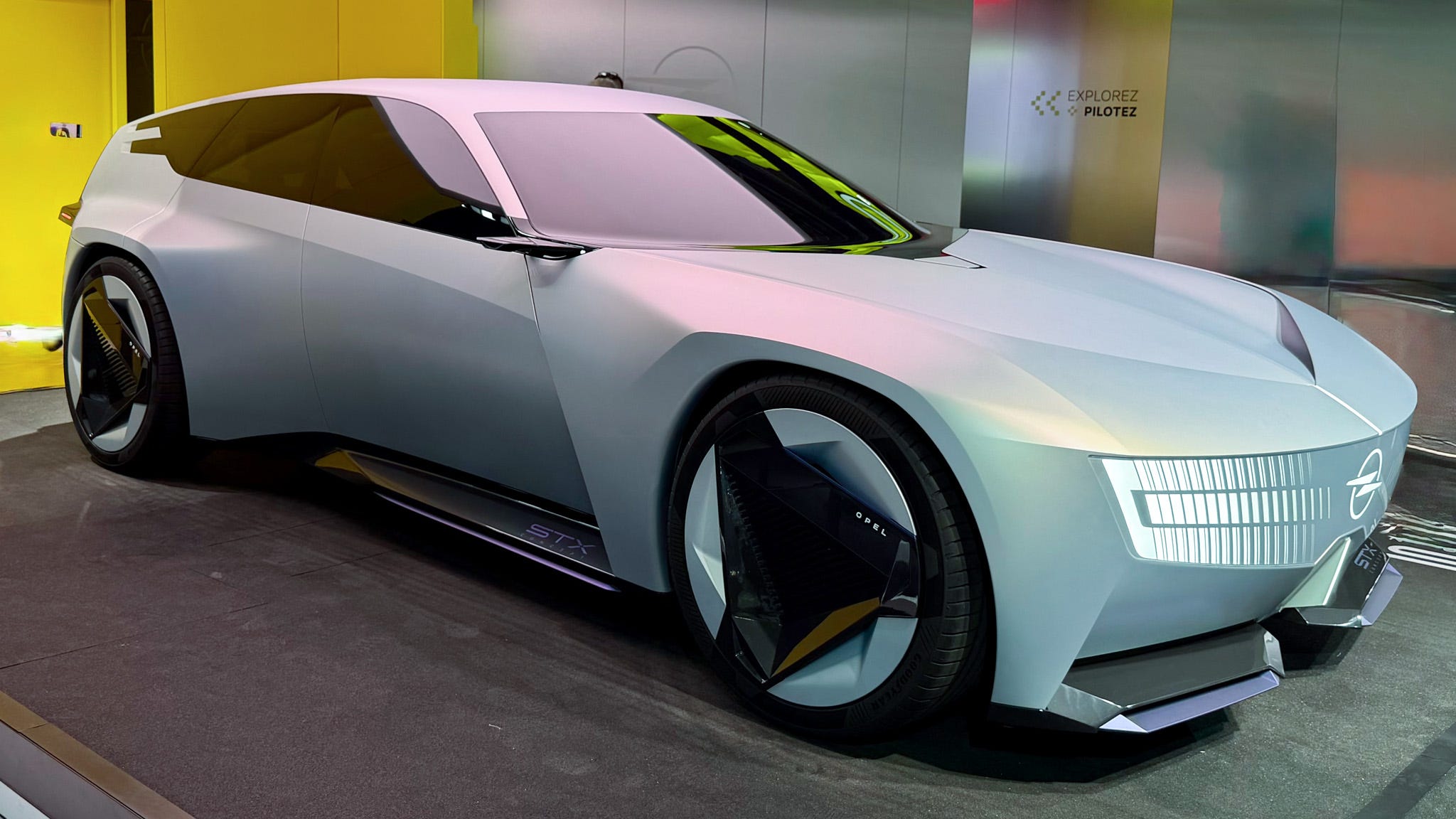
“I think wagons are here to stay,” Gilles said of the Opel STX concept. Of all the Stellantis concepts, this one is perhaps the most challenging in terms of turning it into a production car. “There’s a desire for us to get back to low cars,” Gilles said of the STX’s proportions and stance. But achieving that with an electric powertrain requires a technology that is not yet commercially viable: solid state batteries. Still, Gilles is optimistic. “We’re anticipating solid state batteries will almost be ready by 2029 or 2030,” he said. He also said that solid state battery technology means the overall height of cars will become lower, creating opportunities in terms of those proportions and stances. “This is a study that celebrates that and basically shows our internal and external constituents what’s possible if we get those batteries.” As to the STX’s sharp and muscular form language, he said, “That’s Opel being as German as possible.”
Angus Mackenzie - MotorTrendPeugeot E-T16
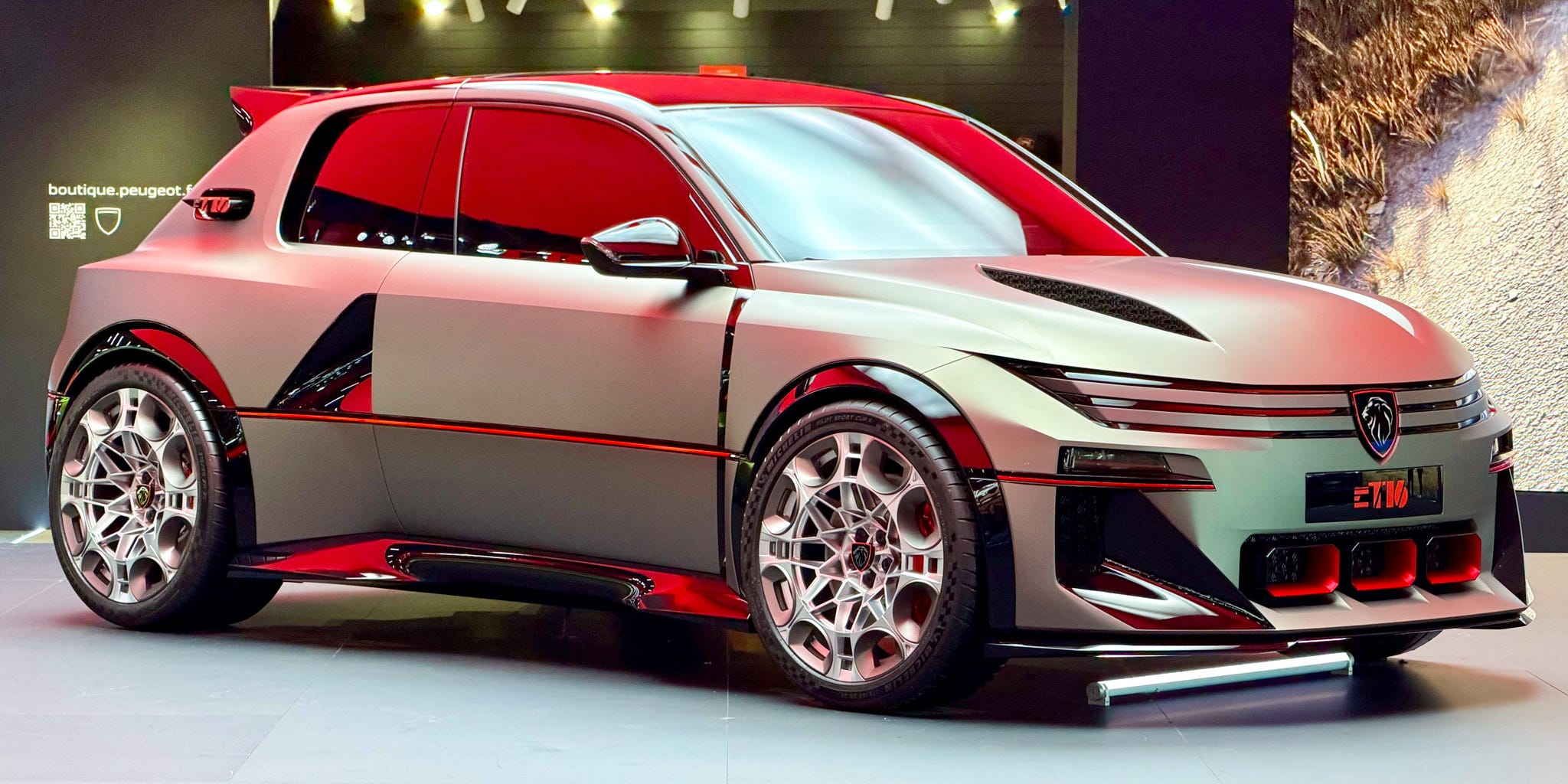
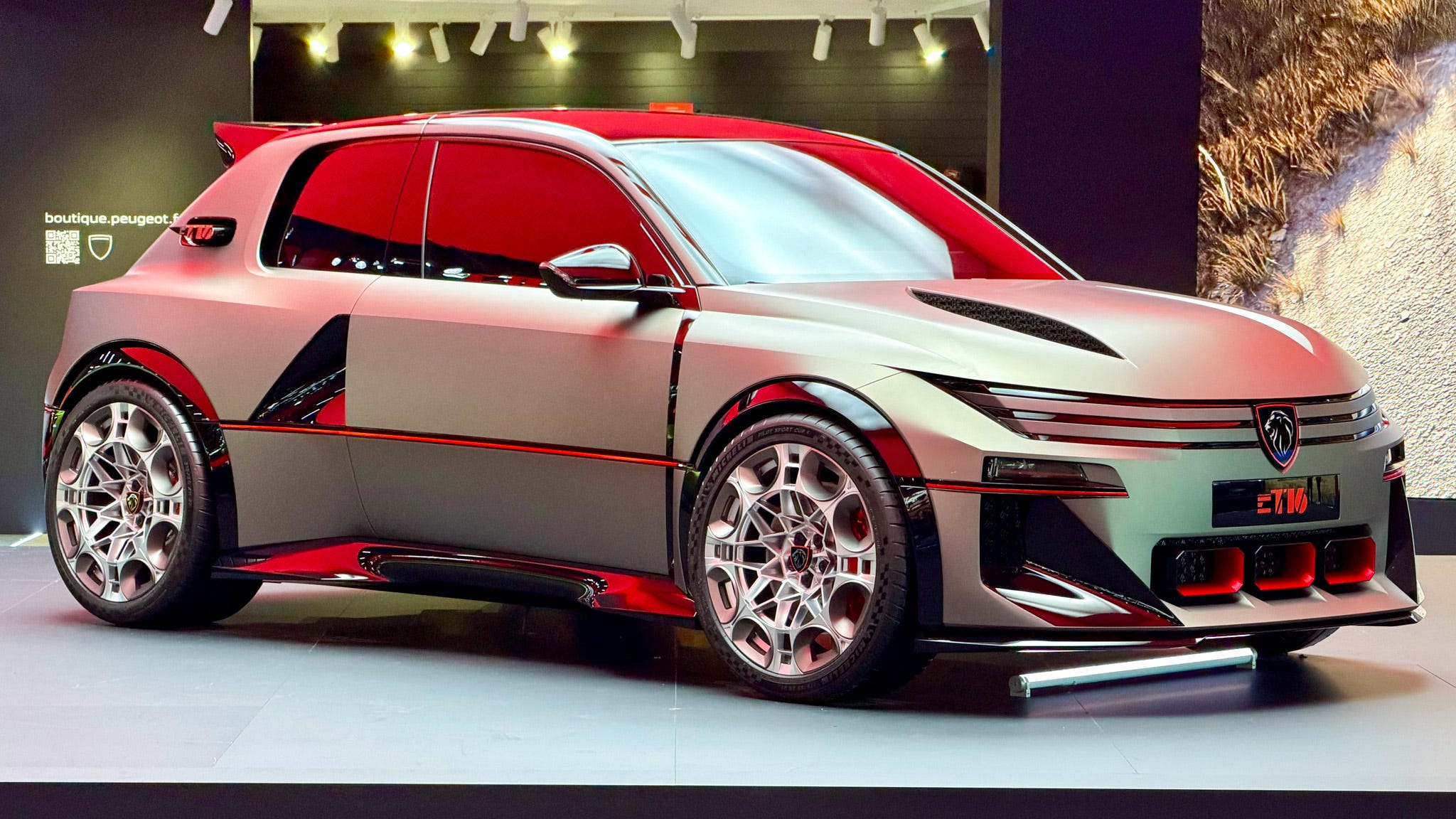
The Peugeot E-T16 is an homage to the legendary mid-engine Peugeot 205 that took the fight to Audi’s Quattro in the glory days of Group B rallying. “It’s a bit of a passion thing,” Gilles said of the muscular E-T16, but Peugeot brand boss Alain Favey confirmed that a limited-run production version—up to 1,000 cars—is under consideration if enough people are prepared to pay more than $230,000 for one. As the name implies, the E-T16 is an EV. It has an 85-kWh battery pack and three electric motors: one at the front and two at the rear. They pump out a total of 805 hp, making this the most powerful Peugeot in history. Peugeot says the E-T16 will storm from 0 to 60 mph in a couple of ticks over 2.0 seconds, hit 186 mph in just 16.0 seconds, and complete three flying laps of the Nürburgring Nordschleife without losing power. Inside are race seats with harnesses, plus a sporty version of Peugeot’s forthcoming F1-style “Hypersquare” steering wheel, which includes a configurable display.
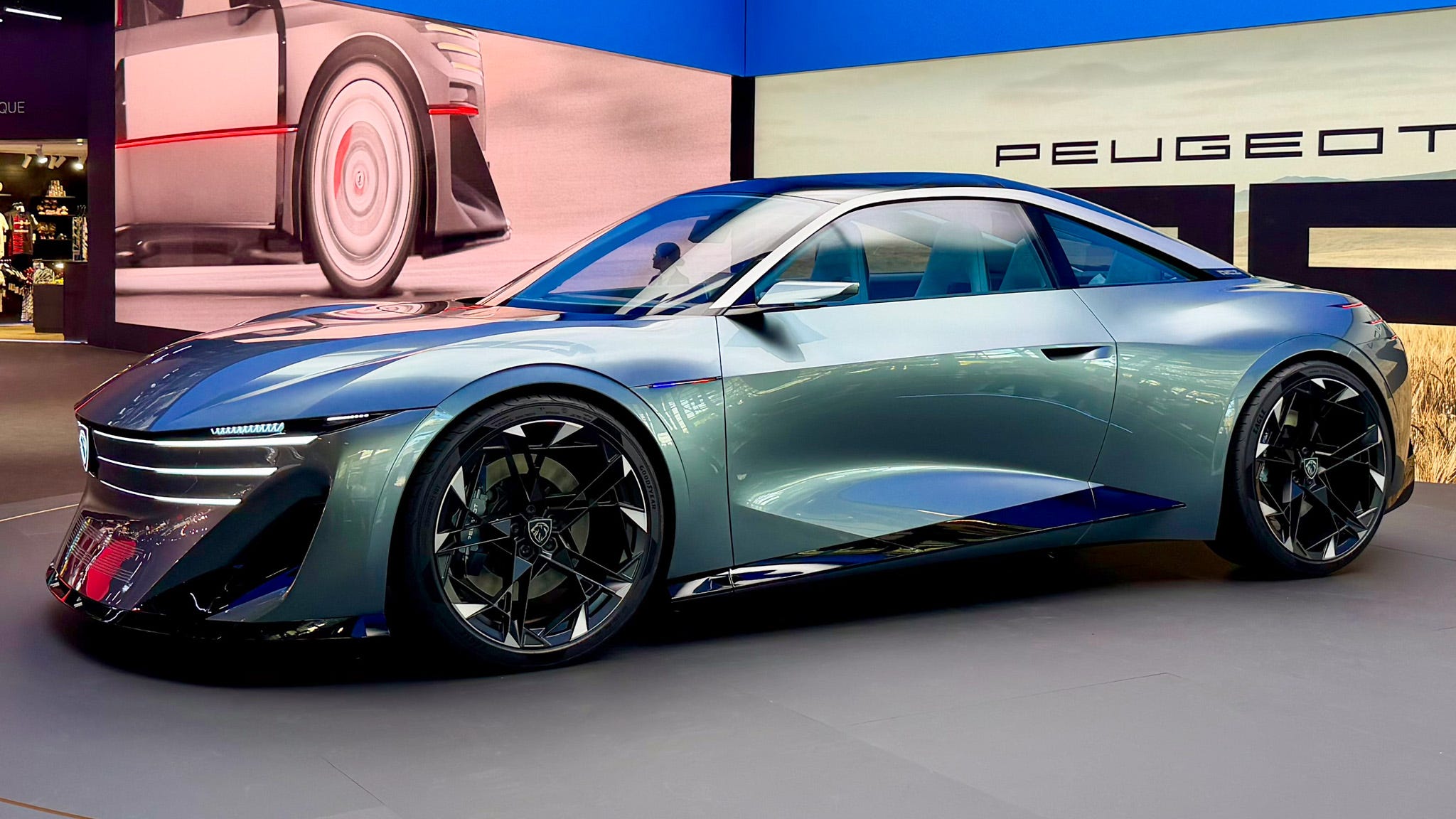
Angus Mackenzie - MotorTrendPeugeot RCZ
The Peugeot RCZ sold from 2009 to 2015 was a sporty coupe built on the quotidian front-drive Peugeot 308 platform—a French take on the Audi TT, if you will. The RCZ concept echoes the original two-door coupe format but amps up the form language to make it a much more aggressive and muscular car. And Gilles is pushing hard to make it a production car. “If I have to die to make it happen, it will be a production car,” he joked. “The engineers are as excited about it as the designers are.” If built, the production RCZ would be an EV and roll on a version of the STLA One platform. “STLA One allows us to push and pull things around quite dramatically,” Gilles said, “and we can reuse some of the electric drive modules in the group’s portfolio to give it some serious horsepower.” Peugeot said the four-seat RCZ, which is about the size of a BMW 4 Series Coupe, previews elements of a new design language that will be rolled out across the Peugeot range over the next few years.
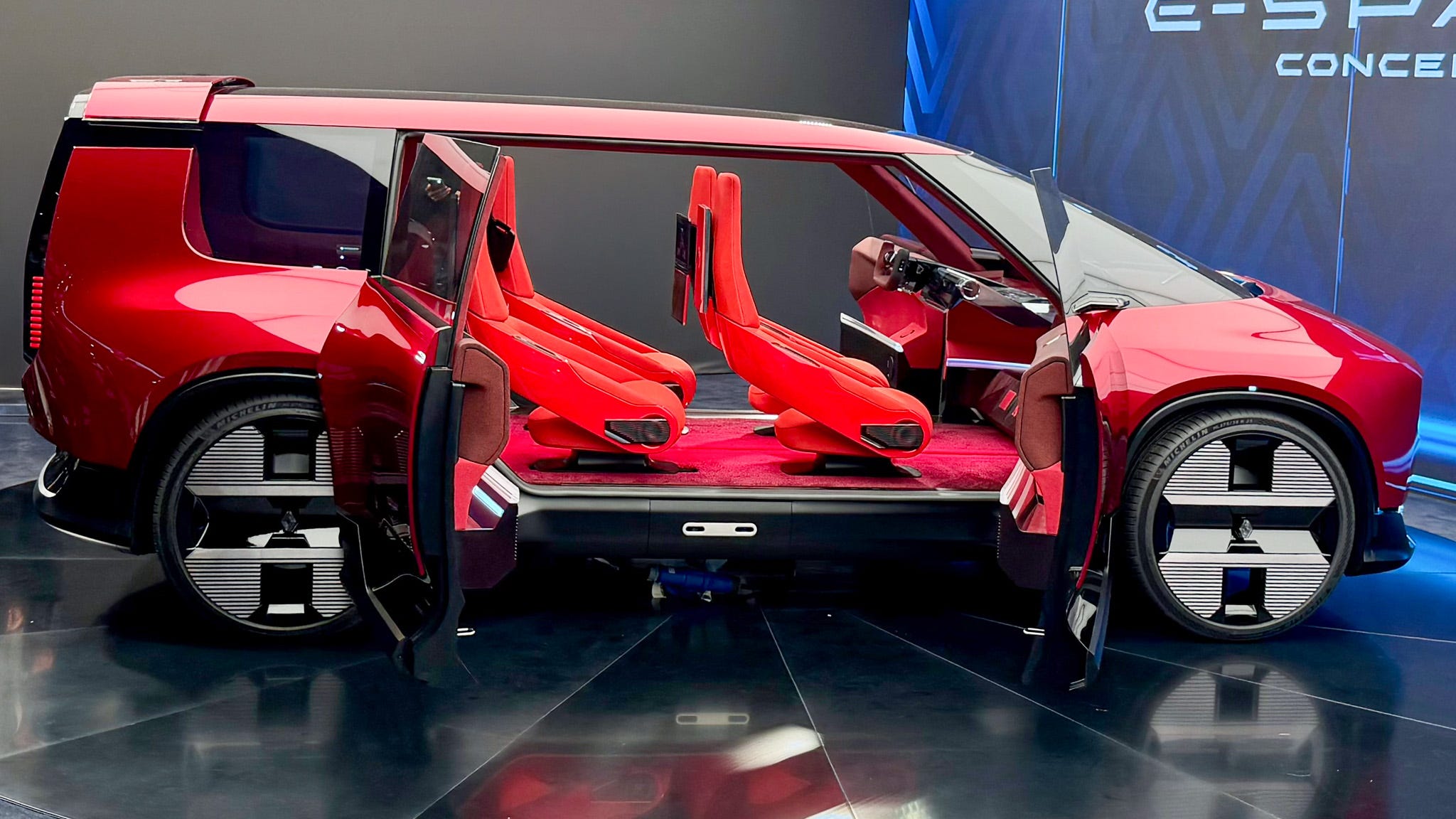
Angus Mackenzie - MotorTrendRenault Espace
Renault launched its first Espace minivan in July 1984, just a few months after Chrysler wheeled out the Dodge Caravan. The Espace stayed in production for almost 40 years (though the nameplate continues, sacrilegiously, on a low-roof SUV). Renault has for the past couple of years been reaching into its back catalogue of hits and reinventing them as funky EVs. We’ve seen electric reincarnations of the Renault 5 (the Le Car), the Renault 4, and the Twingo. Now comes the Renault E-Space, a concept whose proportions and form language—notably the forward-angled grille and chunky D-pillar—are inspired by the original Espace. Yes, it’s a concept. But Renault hinted there could be a production version coming. “The original Espace lost its desirability because you were just considered the chauffeur of your kids,” Renault Group design boss Laurens van den Acker said. “But if the world goes to autonomous driving where you can choose to drive or not, then it changes the whole game with interiors. You can voyage as if you’re in a train.”
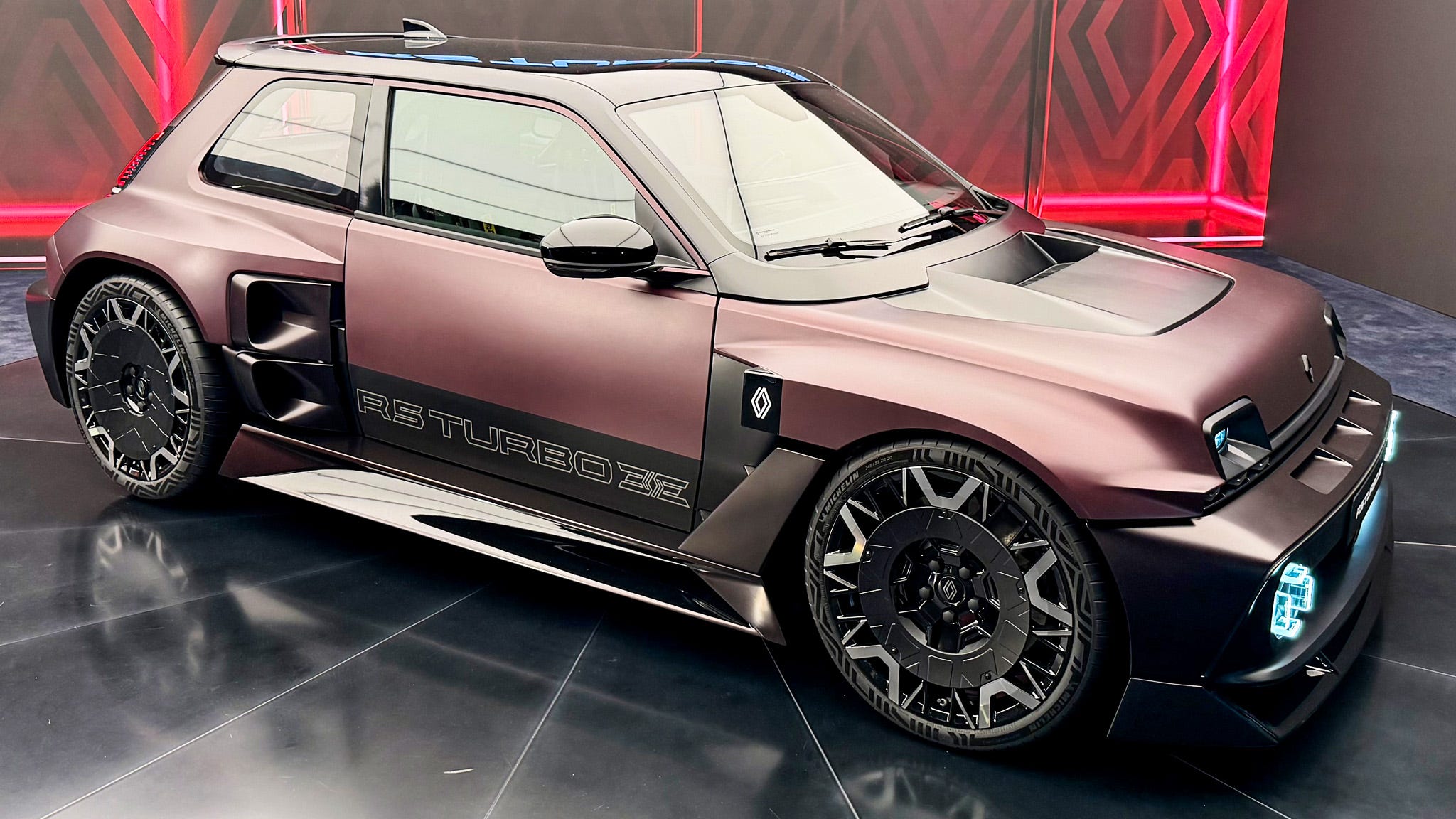
Angus Mackenzie - MotorTrendRenault RS Turbo 3E
The Renault RS Turbo 3E looks like a concept. But this wild dual-motor, 555-hp electric-powered pocket rocket is in fact a production car. The RS Turbo 3E celebrates the original Renault 5 Turbo, a muscular mid-engine, rear-drive rally weapon launched in 1980 that looked like The Hulk’s take on the regular front-drive Renault 5 of the era. The RS Turbo 3E’s two motors are mounted inside the rear wheels and are fed by a 70-kWh battery that can be taken from a 10 percent state of charge to 80 percent in just 15 minutes on a 350-kW fast charger. The car allegedly delivers a range of 248 miles as long as you don’t drive like Bruce Banner in a bad mood. The extreme bodywork is carbon fiber, which helps keep the overall weight down to 3,200 pounds, enabling the RS Turbo 3E to scoot from 0 to 60 mph in just more than 3.0 seconds. Inside are carbon-shelled race-style seats with six-point harnesses, a fully exposed roll cage, and a vertical handbrake lever that allows you to unleash your inner rally hero. Just 1980 will be built, the number recalling the original’s launch year. Prices start at about $180,000.
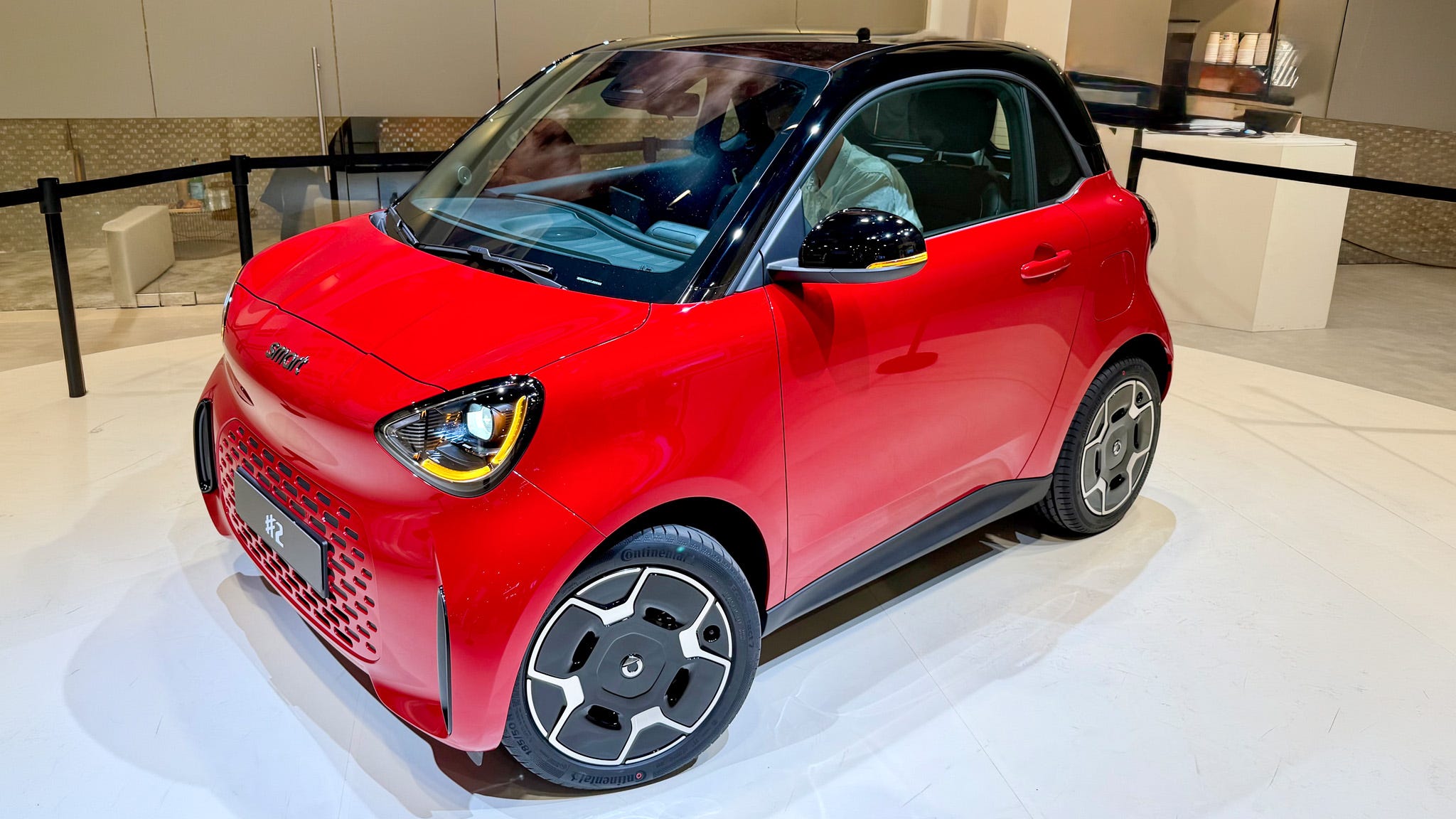
Angus Mackenzie - MotorTrendSmart #2
The original Smart city car, an idea created by Swatch founder Nicholas Hayek and taken over by Mercedes-Benz, shocked the world when it was unveiled in Paris 32 years ago. It was simply so … tiny. The Smart #2 sees the brand—now jointly owned by Geely and Mercedes-Benz—return to its city car roots. And hopefully, as it’s made in China, this one will, unlike the original, make money. At 108.1 inches long, 69.3 inches wide, 61.2 inches tall, and rolling on a 73.8-inch wheelbase, the Smart #2 is within fractions of an inch of the original Smart car in almost every dimension. And like the original Smart, the #2 has a rear-mounted motor that drives the rear wheels, though in this case it’s an 82-hp e-motor. The battery is a 35.8-kWh lithium-iron phosphate unit that delivers a claimed 180-mile range. That’s a big uplift over the last electric-powered Smart, whose 17.6-kWh battery struggled to get it much further than 55 miles.
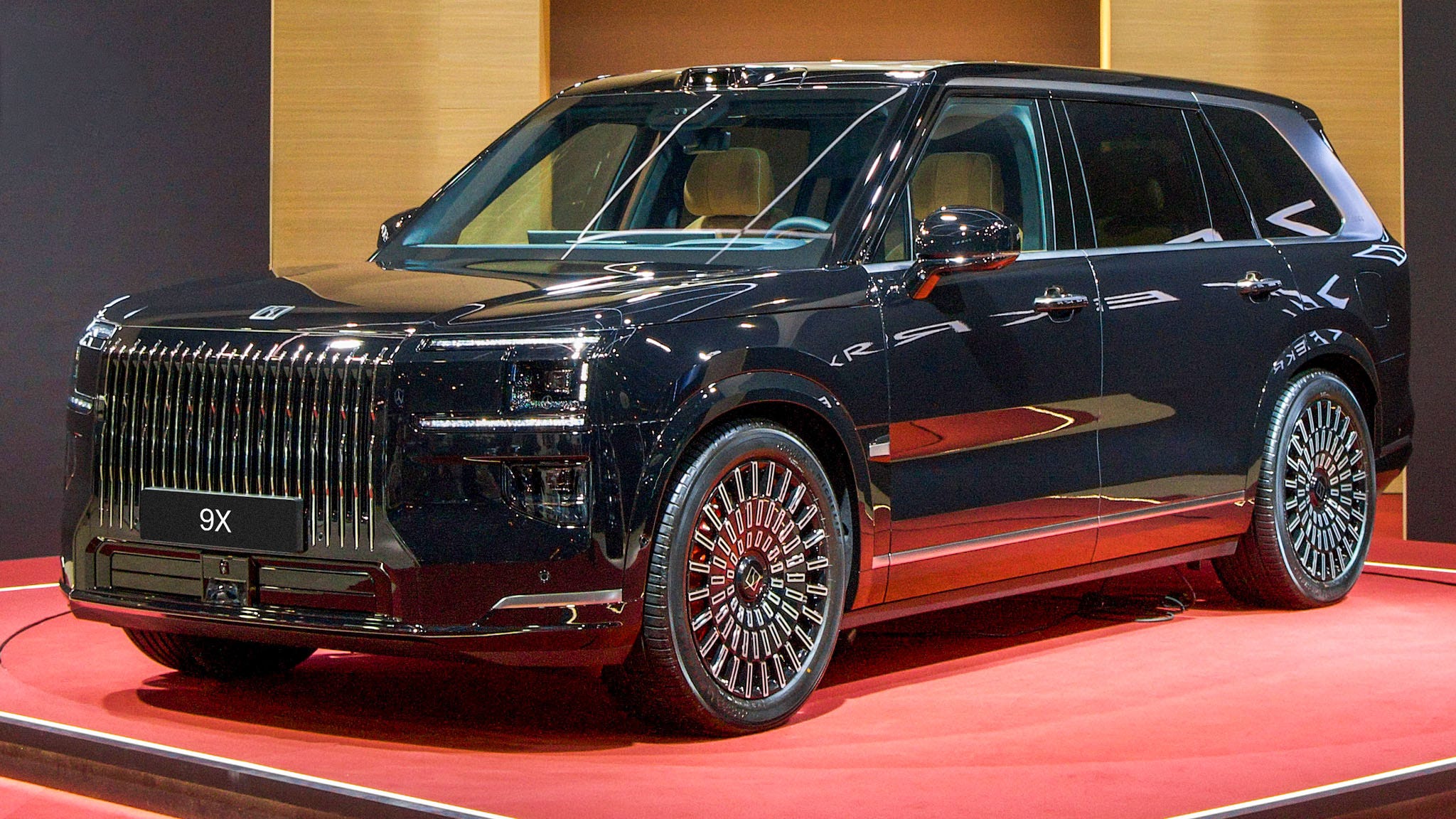
Angus Mackenzie - MotorTrendZeekr 9X
Geely Auto Group calls Zeekr its global luxury technology brand, and the 9X, Zeekr’s new flagship model, is right on brand. The 9X is about the size of a long-wheelbase Range Rover and has an 897-hp, 690-lb-ft plug-in hybrid powertrain. The 2.0-liter internal combustion engine under the hood mainly acts as a generator to keep the 55-kWh battery charged, directly driving the front wheels only at speeds above 50 mph. Geely said the Zeekr 9x will zoom from 0 to 60 mph in about 4.0 seconds, has a top speed of 150 mph, and can travel 112 miles on pure electric power before the ICE needs to fire up and boost the total driving range to 458 miles. The 900-volt electrical architecture means the battery can be taken from a 10 percent state of charge to 80 percent in 9.5 minutes on a fast charger. Inside is room for six, with reclining captain’s chairs in the second row and a 3,868-watt, 32-speaker sound system from British high-end audio manufacturer Naim. And here’s the killer number: The 9X has just gone on sale in Europe for the equivalent of $137,000.
Source: “AOL Money”
